About
Learn about the team behind Wonder Drug.
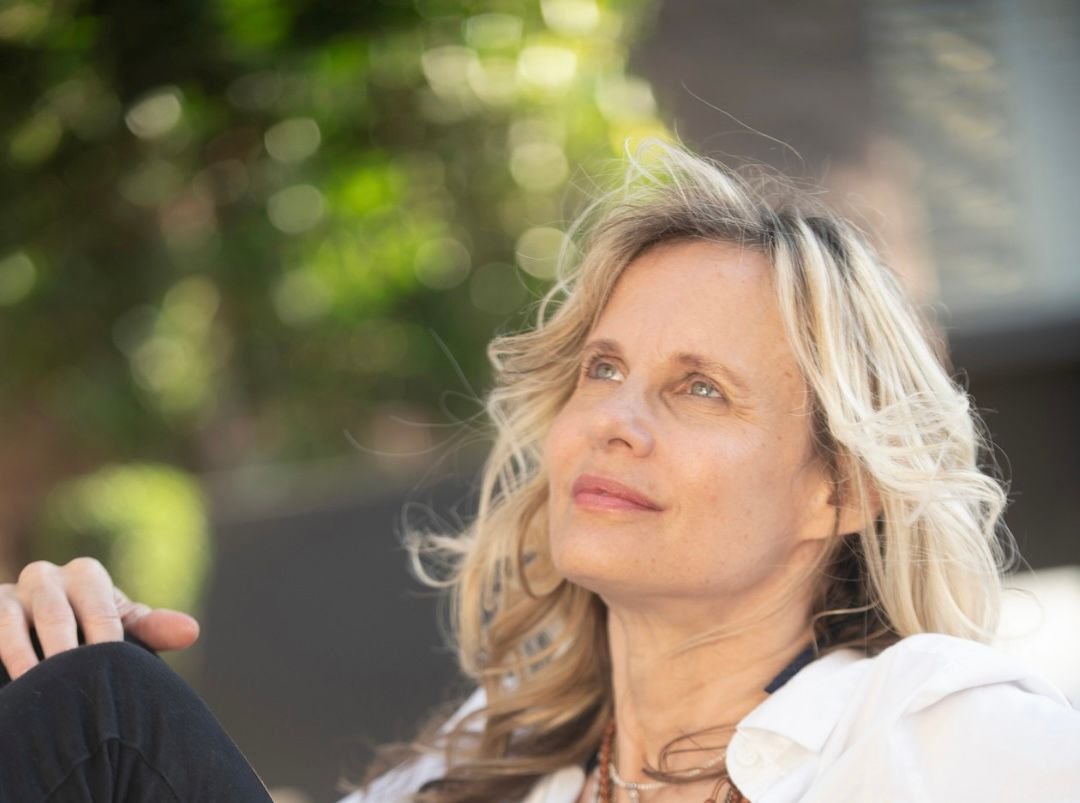
Lori Singer, Director, Co-Writer, and Executive Producer
Lori Singer is a Golden Globe winning actress who is perhaps best known for her role as Ariel Moore in the film Footloose. She went on to act in Robert Altman’s Short Cuts, John Schlesinger’s The Falcon and the Snowman, Warlock, The Man with One Red Shoe co-starring with Tom Hanks, Alan Rudolph’s Trouble in Mind (in which she was nominated for a Best Supporting Actress Indie Spirit Award), and Equinox, to name a few.
Singer plays the title role in Rachel Hendrix, directed by Victor Nuñez and winner of Best Feature Narrative at the 24th edition of the Woodstock Film Festival. Set for an early 2024 release, Singer’s performance in Rachel Hendrix is already drawing rave reviews. The Hollywood Reporter’s Steven Farber wrote, “Singer holds the camera effortlessly even in scenes of silent melancholy. There is not a false note or wasted movement in this full-blooded portrayal.”
In 2015, Singer was in Almereyda’s Experimenter and in 2018 she appeared in James Franco’s film The Institute. She also starred in the television series FAME and VR5. She produced the Peabody winning, three-time prime time Emmy award winning film Silence in the House of God, and she produced God Knows Where I Am, in which she plays the lead in form of narrative. God Knows Where I Am won 17 film festivals, including Toronto Hot docs, was nominated for an Emmy in 2019, and is available on Amazon and Netflix.
Singer is also a concert cellist, performing on film with Yo Yo Ma in Atom Egoyan’s Inspired by Bach and she plays on stage as a cello soloist with orchestras, most recently in Carnegie Hall.
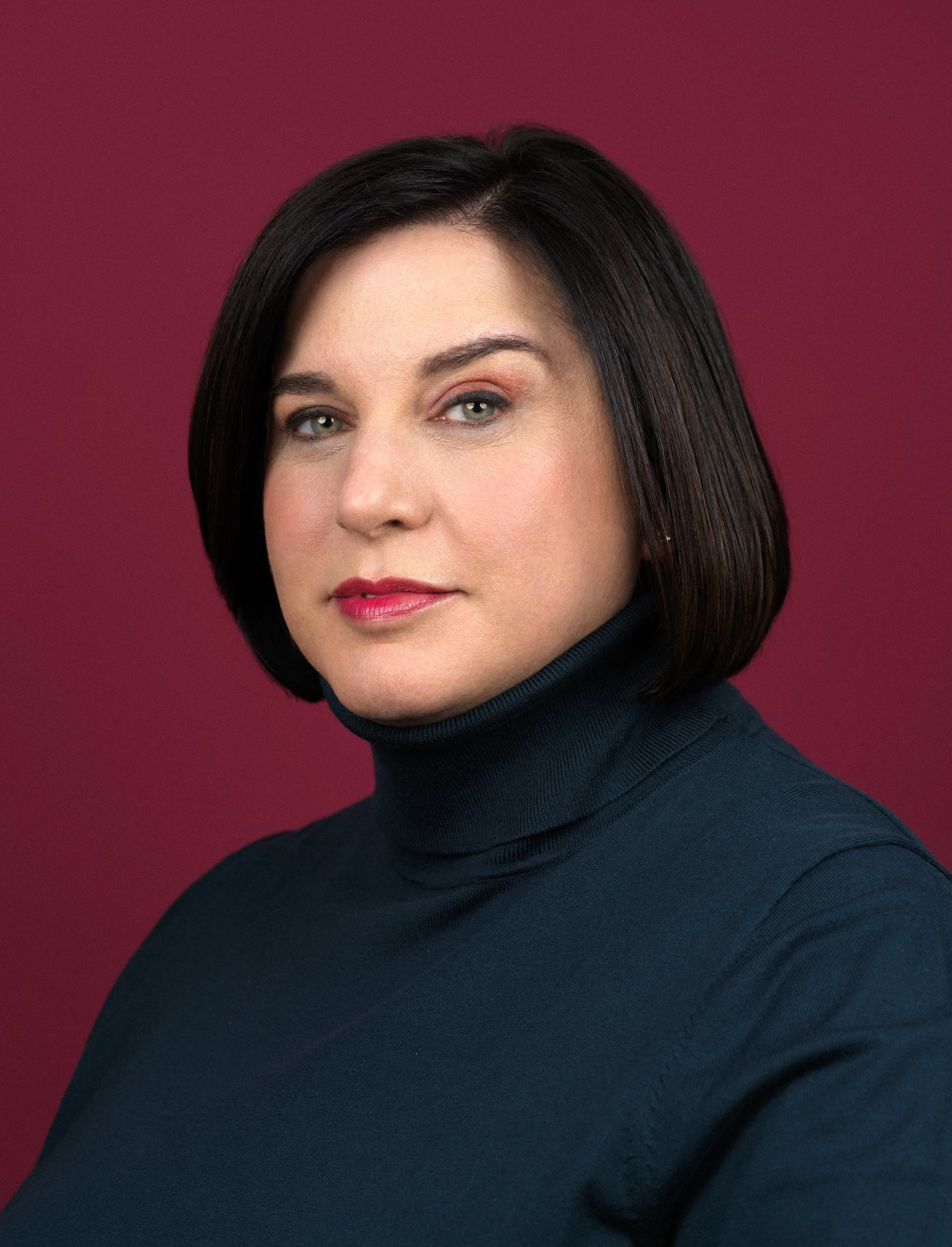
Caitlin McCarthy, Co-Writer and Executive Producer
Caitlin McCarthy was inspired to orginate Wonder Drug because she is a DES Daughter. She earned her Master of Fine Arts in Creative Writing from Emerson College. As an American, she is a member of the Métis Nation of Canada and Métis Federation of Canada; and she holds a Certificate of Aboriginal Status card through the Ontario Métis Family Records Center (OMFRC).
Caitlin wrote the original feature screenplay Little Audrey and served as Associate Producer. The film, set for release in 2026, is directed and produced by Michael Mailer, with producers Jeff Thomas and John Buffalo Mailer, and features an all-star cast including Aidan Quinn, Emily VanCamp, Aidan Quinn, and Josh Bowman.
Her other feature screenplays include A Native Land, selected as a Sundance Institute Cultural Impact Fellow (Inaugural), promoted as a “highly-rated script” by The Black List website, and selected for a Mass Cultural Council Dramatic Writing Fellowship. Caitlin is also partnering on writing/creating the TV series Gaels with Lynsey Murdoch (BBC Scottish Voices 2020), developed with financial assistance from the Scottish Government and the National Lottery through Creative Scotland.
McCarthy was nominated twice (in 2011 and 2012) for a Presidential Citizens Medal for her work on the DES tragedy. As a DES Daughter and activist, Caitlin worked closely with the offices of then-U.S. Senators John Kerry and Scott Brown and obtained an acknowledgement of DES as a “tragedy” from the FDA in 2011 after 40 years of silence. In 2022, Caitlin testified before members of Scottish Parliament about her experiences as an American DES Daughter and the need for a DES apology in Scotland, leading to First Minister Nicola Sturgeon including DES in her historic apology to forced adoption victims in 2023. Caitlin’s DES activism was acknowledged on the floor of Scottish Parliament during a speech by Monica Lennon MSP on International Women’s Day.
McCarthy is represented by Barry Krost of Barry Krost Management (BKM).
Advisors:
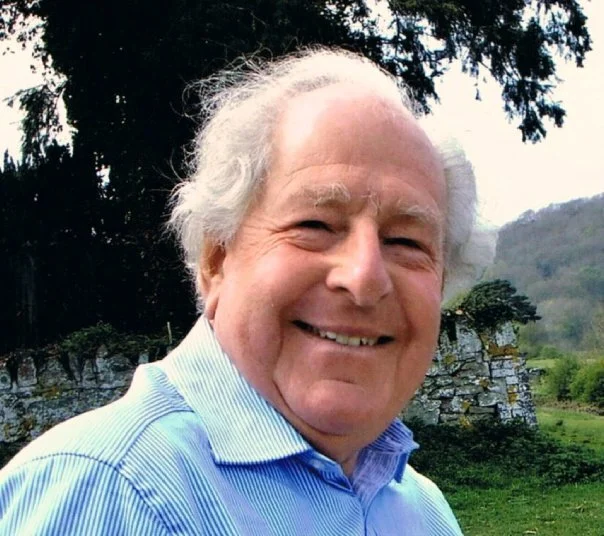
Sir Ralph Dodds.
Sir Ralph Dodds, Script Consultant
Sir Ralph Dodds – only son of professor Sir (Edward) Charles Dodds (creator of DES) – was born in March 1928. He was at school in London and, from 1941 to 1946, at Winchester. He had vivid memories of the buildup of American soldiers on every highway and byway in the months to June 6, 1944 – when, almost overnight, they vanished – to Normandy. Conscripted into the army in May 1946, Dodds went on to Sandhurst (Britain’s West Point) and served as an officer in the Middle and Far East, Germany and England until he resigned his commission in 1958. Married to Marion in 1954, and with two daughters, Dodds worked as an Insurance Broker in the City of London until retirement in 1990. While living in London with Marion, they enjoyed the frequent company of their daughters and four grandchildren – all now grown up. Dodds said it was only with Caitlin McCarthy’s interest and research for the film Wonder Drug that he recalled many small details from his childhood of the original people and places involved in the original research on Diethylstilbestrol (known in the UK as Stilboestrol). Dodds passed away on May 24, 2015.
Harry Jellinck with Caitlin McCarthy (Hamptons International Film Festival).
P. Harry Jellinck (B.A., B.Sc., M.Sc., Ph.D.), Scientific Mentor
P. Harry Jellinck obtained his undergraduate degree in Natural Sciences at Trinity College, Cambridge in 1948 and an M.Sc. and Ph.D. from the University of London (1952 and 1954). As a graduate student for a Ph.D. in the 1950s, Jellinck worked directly under Sir Charles Dodds (creator of DES) at the Courtauld Institute of Biochemistry, Middlesex Hospital, London. After two years as a Postdoctoral Fellow (National Research Council) at McGill University and three years as a lecturer at two medical schools in London, Jellinck returned to Canada to join Dr. R.L. Noble at the newly established Cancer Research Centre, University of British Columbia. Harry was promoted to Full Professor before moving in 1967 to Queen’s University as Head of the Department of Biochemistry. He stepped down from this position in 1978 and became Emeritus in 1993. He was also a Visiting Professor at Rockefeller University, since his first sabbatical in New York in 1978. Jellinck published three textbooks, over 100 scientific papers, and was active in research. He passed away on his 91st birthday (February 20, 2019).